Have you ever looked at the back of your own shampoo bottle and wondered about that never ending list of ingredients? What are those things? Ok, water. I know what water is. Let's see what is on the back of one of the ones I used to use. I keep it around to remind me of how icky that stuff is...
Pantene Classic Shampoo:
Let us go one by one on this list and figure out what this crap is. I like knowing what it is that I'm using.
- Water: H2O, basic, required for every day life. This is O.K. Stuff!
- Sodium Laureth Sulfate: Man-made chemical used as a surfactant: Toxic or harmful to non-reproductive organs, and irritating to the skin, and eyes.
- Sodium Lauryl Sulfate: Man-Made chemical used as a surfactant, foaming, Emulsifying, and denaturant.: Toxic to non-reproductive organs, can be irritating for eyes and skin, environmental toxin.
- Glycol Distearate:
a compound based on stearic acid, a naturally occurring fatty acid. ::
Opacifying Agent; Skin-Conditioning Agent - Occlusive; Viscosity Increasing Agent -Nonaqueous; EMOLLIENT; EMULSIFYING; SKIN CONDITIONING; VISCOSITY CONTROLLING
- Dimethicone:
a silicon-based polymer used as a lubricant and conditioning agent. ::
Antifoaming Agent; Skin-Conditioning Agent - Occlusive; Skin Protectant; EMOLLIENT; SKIN CONDITIONING; SKIN PROTECTING :: Toxic or harmful to non-reproductive organs.
- Cocoamidopropyl Betaine ::
Cocamidopropyl betaine is a synthetic surfactant; it has been associated with irritation and allergic contact dermatitis, reactions that could be due to the ingredient itself or to impurities present in it, such as 3-dimethylaminopropylamine. ::
Antistatic Agent; Hair Conditioning Agent; Skin-Conditioning Agent - Miscellaneous;Surfactant - Cleansing Agent; Surfactant - Foam Booster; Viscosity Increasing Agent - Aqueous; FOAM BOOSTING; VISCOSITY CONTROLLING :: Immune System Intoxicant, Environmental Toxin,
- Sodium Citrate ::
Cosmetic manufacturers use sodium citrate to adjust the acidity of a product. Citrate, in the form of citric acid, is also found in citric fruits and juices. ::
pH Adjuster; BUFFERING; CHELATING; MASKING
- Cocamide Mea ::
Cocamide MEA is a compound synthesized from coconut oils and ethanolamine. ::
Surfactant - Foam Booster; Viscosity Increasing Agent - Aqueous; EMULSIFYING; EMULSION STABILISING; FOAM BOOSTING; VISCOSITY CONTROLLING
- Sodium Xylenesulfonate ::
Sodium Xylenesulfonate is a sodium salt of ring sulfonated mixed xylene isomers. ::
Surfactant - Hydrotrope
- Fragrance (Could the be more vague?) ::
The word fragrance or parfum on the product label represents an undisclosed mixture of various scent chemicals and ingredients used as fragrance dispersants such as diethyl phthalate. Fragrance mixes have been associated with allergies, dermatitis, respiratory distress and potential effects on the reproductive system.
- Citric Acid :: This is Vitamin C ::
Citric acid is an alpha hydroxy acid used in personal care products to adjust the acidity or promote skin peeling and re-growth in the case of anti-aging products. Citric acid is naturally found in citric fruits and juices, providing the characteristic acidic taste.
- Sodium Benzoate ::
Sodium benzoate is a preservative commonly used in foods, pharmaceuticals and cosmetics. :: Limited evidence of sense organ toxicity
- Guar Hydroxypropyltrimonium Chloride ::
Guar Hydroxypropyltrimonium Chloride is a quaternary ammonium derivative of guar gum; used in hair conditioning products. ::
Classified as medium human health priority for non-reproductive organ toxicity.
- Sodium Chloride : It's Salt
- Tetrasodium Edta ::
a chelating agent, used to sequester and decrease the reactivity of metal ions that may be present in a product. :: Non-reproductive organ toxicity - Classified as expected to be toxic or harmful &
Limited evidence of eye toxicity
- Panthenol -
Panthenol is a form of vitamin B5, used as a moisturizer and lubricating compound. This ingredient is listed in the PETA's Caring Consumer guide as a substance that can be of either animal or plant origin.
- Panthenyl Ethyl Ether ::
This ingredient is a small synthetic molecule used as a hair conditioning agent.
- Methylchloroisothiazolinone (I'm not even going to try to pronounce that one.), ::
Methylchloroisothiazolinone is a widely-used preservative; has been associated with allergic reactions. ALLERGIES - irritation to skin & immune system.
- Methylisothiazolinone. ::
Methylisothiazolinone is a widely-used preservative; has been associated with allergic reactions. Lab studies on the brain cells of mammals also suggest that methylisothiazolinone may be neurotoxic. (Happy Happy Joy Joy)
After looking at this, it's no wonder I stopped using commercial hair shampoos. I've been sensitive to chemicals on my skin for as long as I can remember. Check your own bottles and research the ingredients and see what you find.
As gross and unsettling as this may seem, you can still have squeaky clean hair naturally and completely without all of these nasty things, and for a fraction of the amount and without the toxins.
This may be the easiest recipe you'll ever make. To make a non-toxic, natural, environmentally friendly and healthy Shampoo. You need only two ingredients.
- 2 C. Water
- 2 Tbsp. Baking Soda
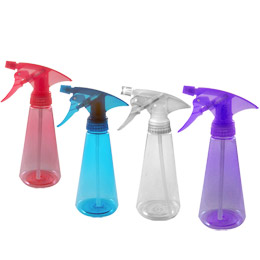
Yes. That's it. No more no less. Surprised? I was too. I find it easiest to use a squirt bottle, other wise you'll get more on the shower floor than in your hair. A cleaned out pump-spray bottle will do perfectly, or check out your local dollar store.
There may be a transition period where your hair may seem less than... how to put it... perfect, about 2 - 3 weeks, give or take. To make this transition easier, wean your hair from your normal shampoo.
For someone who washes their hair every day...
- Week 1: Use the Baking Soda mix 2-3 times instead of shampoo
- Week 2: Baking Soda Mix, 3-4 times
- Week 3. 4-5 times
- Week 4: 5-6 times
By the time you get to the end of that, You'll be using it all the time.
Though you don't need to wash your hair every day, it is safe for daily use. However, if may strip out color in color treated hair, but that is true with just about any regular shampoo. This is also good for all hair types.
If you feel the need for some conditioning, Try spritzing your hair with Apple Cider Vinegar and leave it in and react to the baking soda for a minute or two before you rinse with water.
Does your hair have special needs? Try these variations on a theme to make it more friendly to you and your hair;
- Control Static by massaging a tablespoon or two of olive oil and letting it set for a couple of minutes before you rinse.
- Use an avocado and lemon juice mixture through out your hair, letting it set for 30 minutes then rinse.
- Oily hair? The Baking soda mix should help with that, but if you need more oil control, mix an egg with some lemon juice, work it in, let it set for a few minutes and rinse.
- Shampoo to thin? Add oatmeal flour. (Grind up some oats in your food processor or blender). You can also use cornstarch, or a mixture of both in the Baking soda/Water shampoo.
Give this a shot, let me know how it works for you. Remember you may have a transition period before your hair will return it's happiness with a smile, but your hair and your health will be better for it.
References: