Love handicrafts? Shop small scale, use Etsy!

Saturday, May 5, 2012

What is it? :: Kombucha Tea

"Kombucha is an effervescent tea-based beverage that is often consumed for its anecdotal health benefits or medicinalpurposes. Kombucha is available commercially and can be made at home by fermenting tea using a visible, solid mass ofyeast and bacteria which forms the kombucha culture, often referred to as 酵母 (kombo, lit. "yeast mother", see etymology for disambiguation with 昆布, kombu, kelp)."


This bubbly is made by the fermentation of tea.  It has been said to have medicinal properties. For thousands of years cultures around the world understood the value of fermented foods and beverages, but I'll get deeper into fermentation in a different post. This drink is no different.

This drink is ancient. It has been around for thousands of years, was and is still used by many cultures around the world. There are many stories about it's origin... one of which;
"Iit was invented in the Qin Dynasty (220BC) for the Emperor Qinshi Huangdi.  The Chinese are famed for their quest for all manner of longevity elixirs. From Kombucha to Chinese medicine, the Chinese have always looked to nature to cure what ails them. At that time it was called “The Tea of Immortality.”  Chá (茶) is the Chinese word for tea.  In China, Kombucha has been called “Sea Treasure” (海寶), “Stomach Treasure” (胃寶) and “Sea Mushroom”(海蘑菇). Today, it goes by the names hongchajun 红茶菌 (literally “red tea bacteria/fungus/yeast”), hongchagu 红茶菇 (“red tea mushroom”), or chameijun 茶霉菌 (“tea mold”).  During the Cultural Revolution, every household had a pot of Kombucha brewing, but it has fallen out of the daily routine of the modern Chinese lifestyle."
Japan, China, Russia, throughout Eastern Europe, even ancient Egypt... So many countries, so little time. With so many cultures creating Kombucha, there is no doubt that it would have many names...
"* The Remedy of Immortality
* Kombucha Fungus
* Gout Jelly-fish
* Hongo
* Tea Mould
* Indian Tea Fungus
* Japanese Tea Fungus
* Kambotscha
* Koucha kinoko
* Manchu Fungus
* Manchurian Mushroom
* Teekwass Fungus"
To name just a few, *giggles*

Like wine into vinegar, or milk into an aged cheese, it all begins with a culture. This one is made up of both yeast and bacteria. In fact the culture is sometimes referred to as "Mother of Vinegar." As in making vinegar, the culture forms a mass, sometimes called a mushroom. Also known as SCOBY which is an acronym for Symbiotic Culture of Bacteria and Yeast, can contain several species of yeast and bacteria. The bacteria combats the natural alcohol by product produced by the yeast, which like in beer, gives it, it's effervescence.

Unfortunately, the scientific study on the health benefits is rather limited, however some claim it is a miracle drink. The list of medicinal properties is rather long, but among these is: digestive aid, cancer recovery, sharpens eyesight, and joint recovery.

It's even been said that Kombucha is great for detoxification. The enzyme glucuronic acid is used by the liver to remove toxicity from the body.
"The idea that glucuronic acid is present in kombucha is based on the observation that glucuronic acid conjugates (glucuronic acid waste chemicals) are increased in the urine after consumption. Early chemical analysis of kombucha brew suggested glucuronic acid was the key component, and researchers hypothesized the extra glucuronic acid would assist the liver by supplying more of the substance during detoxification. These analyses were done using gas chromatography to identify the different chemical constituents, but this method relies on having proper chemical standards[citation needed] to match to the unknown chemicals."
Have you ever tried Kombucha? Tell me about your experience with it.

Until next time, kittens.


References:

  1. http://en.wikipedia.org/wiki/Kombucha
  2. http://www.kombuchakamp.com

Friday, May 4, 2012

Upcycle This: Egg Cartons

Egg Cartonby ~Gwynstock

Here are some useful things you can do with the left over egg cartons...

In the garden

  • Starting Seeds. Poke some drainage holes in the bottom. Small pebbles at the bottom to keep the holes from being clogged by soil! Add soil & seeds! Cardboard ones biodegrade, you can transplant each little cup directly!
  • Holding seeds from packages while planting
  • Collecting seeds from your plants to put away for next year.
  • Garden markers... Styrofoam carton, permanent marker, and a chopstick, stick or small dowel to steak it into the ground.
Don't sweat the small stuff...
  • Great for protecting small delicate fruits and veggies like tomatoes and berries.
  • Also great for storing earrings, small pins and brooches.
Office Space
  • Cardboard ones make great pin boards. The paper is strong and can hold a pushpin and a note very well. 
  • Store your paper clips, rubber bands and any of the numerous itty bitty office stuff that gets lost in a desk drawer.
Crafty!
  • Decorate it with paint, ribbons, glitter... anything. It makes a great craft project for kids!
  • Decorate it and use it for bead storage.
  • Make egg carton caterpillars with one of the long rows!
  • Nubs of crayons and pastels are a pain. Put them in egg carton cup, find what you need and keep using them.
  • Saving crayon nubs for remelting and making homemade crayons.
There are tons of things egg cartons can be used for and made into in the craft room. I'll be sure to do a whole entry on the crafty side of egg cartons, with pictures, and instruction for upcycling fun!

References

How To: Shampoo

Have you ever looked at the back of your own shampoo bottle and wondered about that never ending list of ingredients? What are those things? Ok, water. I know what water is. Let's see what is on the back of one of the ones I used to use. I keep it around to remind me of how icky that stuff is...


Pantene Classic Shampoo:


Let us go one by one on this list and figure out what this crap is. I like knowing what it is that I'm using.


  • Water: H2O, basic, required for every day life. This is O.K. Stuff!
  • Sodium Laureth Sulfate: Man-made chemical used as a surfactant: Toxic or harmful to non-reproductive organs, and irritating to the skin, and eyes.
  • Sodium Lauryl Sulfate: Man-Made chemical used as a surfactant, foaming, Emulsifying, and denaturant.: Toxic to non-reproductive organs, can be irritating for eyes and skin, environmental toxin.
  • Glycol Distearate a compound based on stearic acid, a naturally occurring fatty acid. ::  Opacifying Agent; Skin-Conditioning Agent - Occlusive; Viscosity Increasing Agent -Nonaqueous; EMOLLIENT; EMULSIFYING; SKIN CONDITIONING; VISCOSITY CONTROLLING
  • Dimethicone  a silicon-based polymer used as a lubricant and conditioning agent. ::  Antifoaming Agent; Skin-Conditioning Agent - Occlusive; Skin Protectant; EMOLLIENT; SKIN CONDITIONING; SKIN PROTECTING :: Toxic or harmful to non-reproductive organs.
  • Cocoamidopropyl Betaine ::  Cocamidopropyl betaine is a synthetic surfactant; it has been associated with irritation and allergic contact dermatitis, reactions that could be due to the ingredient itself or to impurities present in it, such as 3-dimethylaminopropylamine. ::  Antistatic Agent; Hair Conditioning Agent; Skin-Conditioning Agent - Miscellaneous;Surfactant - Cleansing Agent; Surfactant - Foam Booster; Viscosity Increasing Agent - Aqueous; FOAM BOOSTING; VISCOSITY CONTROLLING :: Immune System Intoxicant, Environmental Toxin, 
  • Sodium Citrate ::  Cosmetic manufacturers use sodium citrate to adjust the acidity of a product. Citrate, in the form of citric acid, is also found in citric fruits and juices. ::  pH Adjuster; BUFFERING; CHELATING; MASKING
  • Cocamide Mea ::  Cocamide MEA is a compound synthesized from coconut oils and ethanolamine. ::  Surfactant - Foam Booster; Viscosity Increasing Agent - Aqueous; EMULSIFYING; EMULSION STABILISING; FOAM BOOSTING; VISCOSITY CONTROLLING
  • Sodium Xylenesulfonate ::  Sodium Xylenesulfonate is a sodium salt of ring sulfonated mixed xylene isomers. ::  Surfactant - Hydrotrope
  • Fragrance (Could the be more vague?) ::  The word fragrance or parfum on the product label represents an undisclosed mixture of various scent chemicals and ingredients used as fragrance dispersants such as diethyl phthalate. Fragrance mixes have been associated with allergies, dermatitis, respiratory distress and potential effects on the reproductive system.
  • Citric Acid :: This is Vitamin C ::  Citric acid is an alpha hydroxy acid used in personal care products to adjust the acidity or promote skin peeling and re-growth in the case of anti-aging products. Citric acid is naturally found in citric fruits and juices, providing the characteristic acidic taste.
  • Sodium Benzoate ::  Sodium benzoate is a preservative commonly used in foods, pharmaceuticals and cosmetics. :: Limited evidence of sense organ toxicity
  • Guar Hydroxypropyltrimonium Chloride ::  Guar Hydroxypropyltrimonium Chloride is a quaternary ammonium derivative of guar gum; used in hair conditioning products. ::  Classified as medium human health priority for non-reproductive organ toxicity.
  • Sodium Chloride : It's Salt
  • Tetrasodium Edta ::  a chelating agent, used to sequester and decrease the reactivity of metal ions that may be present in a product. :: Non-reproductive organ toxicity - Classified as expected to be toxic or harmful &  Limited evidence of eye toxicity
  • PanthenolPanthenol is a form of vitamin B5, used as a moisturizer and lubricating compound. This ingredient is listed in the PETA's Caring Consumer guide as a substance that can be of either animal or plant origin.
  • Panthenyl Ethyl Ether ::  This ingredient is a small synthetic molecule used as a hair conditioning agent.
  • Methylchloroisothiazolinone (I'm not even going to try to pronounce that one.), ::  Methylchloroisothiazolinone is a widely-used preservative; has been associated with allergic reactions. ALLERGIES - irritation to skin & immune system.
  • Methylisothiazolinone. ::  Methylisothiazolinone is a widely-used preservative; has been associated with allergic reactions. Lab studies on the brain cells of mammals also suggest that methylisothiazolinone may be neurotoxic. (Happy Happy Joy Joy)
After looking at this, it's no wonder I stopped using commercial hair shampoos. I've been sensitive to chemicals on my skin for as long as I can remember. Check  your own bottles and research the ingredients and see what you find.

As gross and unsettling as this may seem, you can still have squeaky clean hair naturally and completely without all of these nasty things, and for a fraction of the amount and without the toxins.

This may be the easiest recipe you'll ever make. To make a non-toxic, natural, environmentally friendly and healthy Shampoo. You need only two ingredients.

  1. 2 C. Water
  2. 2 Tbsp. Baking Soda
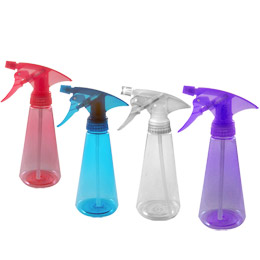
Yes. That's it. No more no less. Surprised? I was too. I find it easiest to use a squirt bottle, other wise you'll get more on the shower floor than in your hair. A cleaned out pump-spray bottle will do perfectly, or check out your local dollar store.

There may be a transition period where your hair may seem less than... how to put it... perfect, about 2 - 3 weeks, give or take. To make this transition easier, wean your hair from your normal shampoo.

For someone who washes their hair every day...
  • Week 1: Use the Baking Soda mix 2-3 times instead of shampoo
  • Week 2: Baking Soda Mix, 3-4 times
  • Week 3. 4-5 times
  • Week 4: 5-6 times
By the time you get to the end of that, You'll be using it all the time. 

Though you don't need to wash your hair every day, it is safe for daily use. However, if may strip out color in color treated hair, but that is true with just about any regular shampoo. This is also good for all hair types.


If you feel the need for some conditioning, Try spritzing your hair with Apple Cider Vinegar and leave it in and react to the baking soda for a minute or two before you rinse with water.

Does your hair have special needs? Try these variations on a theme to make it more friendly to you and your hair;


  • Control Static by massaging a tablespoon or two of olive oil and letting it set for a couple of minutes before you rinse.
  • Use an avocado and lemon juice mixture through out your hair, letting it set for 30 minutes then rinse.
  • Oily hair? The Baking soda mix should help with that, but if you need more oil control, mix an egg with some lemon juice, work it in, let it set for a few minutes and rinse.
  • Shampoo to thin? Add oatmeal flour. (Grind up some oats in your food processor or blender). You can also use cornstarch, or a mixture of both in the Baking soda/Water shampoo.
Give this a shot, let me know how it works for you. Remember you may have a transition period before your hair will return it's happiness with a smile, but your hair and your health will be better for it.

References:

How To: Fly Traps

HOUSEFLIES!!!!!!! ACK!

We know them. We have the. We HATE them. UGH!!! 

Like the rest of you, I've tried the fly paper in the little tubes. They're sticky, and make a mess on the walls and curtains and windows if they get stuck to them.

Fly traps -- can have toxic chemicals that can be dangerous to you, your household, your pets and your children if they ever get a hold of it.

On the other hand. If you don't get RID of the fly infestations, they'll sit on your food, eat it and lay eggs, which turn into maggots., so you can't safely leave anything out, including fruits YUCK!

We all have those stories. They are pests in the house and need to be gotten rid of, so below I've given you a a great easy way to use 3 house hold items to make a safe, non-toxic trap.

Supplies:
  • a couple sheets of paper (Scrap paper or old newspaper is just fine for this)
  • a jar
  • Apple Cider Vinegar
Instructions:
  1. Fill the jar with 1 inch of vinegar.
  2. Roll a couple sheets of paper into a funnel.
  3. Place the narrowest end into the jar and spread it out so it doesn't slide in.
The flies will be attracted to they fruity apple cider vinegar, walk/fly down the funnel to get to the "tastiness." They won't be able to find their way out. They will either drown or become exhausted and drown. Either way, you'll be free of flies. Change the vinegar every other day or so until your infestation is gone. Because it's non-toxic you can keep a trap going all the time to keep your home fly free. Put one in every room in the house if you so choose.

Do you have fly trapping tips? Share them!


Wednesday, May 2, 2012

Letter to my readers #1

Dear readers,

Thank you for reading my blog. I hope you're enjoying it so far. It's still in it's early stages and I'm sure it will be rearranged, photos will be added as I can take them or find in stock photo sources.

I far from know everything but I am happy to try to answer and find out answers to your questions. I am also open topic suggestions. Is there anything you wanted to know about how to accomplish something or make something on in your mini-homestead? Tell me about it and I'll try to make it happen.

Thanks again kittens,
Nicole!

How To: Curds & Whey

Little Miss Muffet 4by *intergalacticstock

I'm sure we many of us remember the old nursery rhyme about little miss muffet.

“Little Miss Muffet, sat on a tuffet,
eating her curds and whey.
Along came a spider who sat down beside her,
and frightened Miss Muffet away.”


Curds and Whey is what we usually call “cottage cheese” and it is readily sold in grocery stores. Large curd, small curd, whole milk, 2 percent, skim, so many name for the same basic thing that has been eaten for a millenia. Curds are the milk solids, and whey is the liquid that remains after curdling. Most of the time they are separated for cheese making, and the whey is tossed aside.


Did you know that you can make your own cottage cheese at home? Sure you can. Once you get this part down, than you can make a couple other types of fresh cheeses to enjoy.

For this recipe I prefer fresh raw whole milk, but conventional will do. I wouldn't go beyond 2% milk. The fat helps with mouth feel and proper coagulation. If you use convetional, I'd recommend organic. You'll get a better product.


What You'll Need:

  • ½ Gallon Whole or 2% Milk
  • 1/4 - 1/2 C. Lemon Juice
  • 1 tsp. Salt (or to taste)
  • Cheese cloth, muslin or a piece of clean cotton t-shirt.
  • A strainer. Plastic is preferred, but stainless steel will do. Do not use aluminum because it will react badly with the acid.
  • Heavy bottomed sauce pot.
  • Wooden spoon.
  • Glass bowl
  • Cold Water

On to the making...

  1. Put the colander into the bowl, then line the bowl with the cloth, at put it in your sink. We'll come back to this
  2. Pour the milk into a heavy bottom sauce pot, add salt and slowly bring to a boil. I don't go above medium heat for this. Check it constantly and stir gently. Milk will boil over very quickly so keep close tabs on it.
  3. Once it has come to a boil, turn down the head to a simmer, and slowly add the juice. Stirring as little as possible and VERY gently, so you don't break up the curds. Use your judgement here, if it needs more lemon juice, add it, but a little at a time.
  4. When the solids and liquid have separated, simmer for another 30 seconds or so.
  5. Pour the cheese and whey into the strainer. Lift your colander slowly so you don't splash yourself with hot liquids. Reserve the liquid in the bowl, and set that aside. Let the cheese drain.
  6. Run cold water on the curds, moving them gently around with your hand. This will remove the lemon juice flavor and firm up the curd slightly.
  7. Bundle up the curds, drain, and squeeze gently to get more liquid out.
  8. If you want the curd in smaller pieces, now is the time to do it. Be gentle. Use your hands.
  9. Put your strained curds into a storage container, and taste them to check the salt. Add more if you want to.
  10. Let the whey cool to room temperature if it hasn't already, then add about ¼ to a ½ cup of the whey into the curd. Stir gently to combine. Adjust the liquid to your personal preference.
  11. Snap on the lid of your container, and let it set in the fridge for a few hours. Come back and check if the liquid is still how you like it. Remove or add according to your taste. Put it back into the refrigerator for another 24 hours to let it set before eating.
  12. Enjoy your home made cottage cheese.
Once you get this whole curds and whey thing down, you can make paneer and queso fresco. They both start with this basic separation method. We'll explore those cheeses and more in my next post.

It's easier than it seems, I promise you. Once you get the hang of it, you'll be making it more and more. And do you remember that extra whey? That isn't a waste product. There are things we can do with it. It is still packed with nutrition and awesome enzymes for fermentation. I could write several more posts on those subjects, and I most certainly will.

Tuesday, May 1, 2012

What it it? :: Got Milk... in the Raw?


Milk glass 1 by ~makemeyours


What is Raw Milk?

Raw milk is just that, raw. It has not been homogenized or pasteurized. It is as pure from the animal as it could possibly be without you consuming it from the animal's teats yourself.


Pasteurized & Homogenized... Is it really safer?

Pasteurization is the process of heating a food, usually a liquid to a specific temperature, for a specific length of time and then cooling it right away to slow the growth of harmful bacteria, which slows it's spoilage. It was never intended to kill ALL of the microorganisms, but to reduce their numbers so the food will have a longer shelf life.


Homogenization of milk is done to make the milk solids, fats and liquids one big happy family, also known as an emulsion. Like oil and vinegar for a salad dressing, mixing it forms a consistent product, in mouth feel and flavor.


Do this pair of processes really make a safer milk? Yes and no. Like anything there are pros and cons to both. The FDA as well as the Centers for Disease Control (CDC) say that raw milk is unsafe to drink due to pathogens, while a movement of organizations and people promoting a traditional foods lifestyle say that raw milk can be produced in a humane and safe way.


And of course to cover my own ass: “The Department of Health and Human Services, Center for Disease Control and Prevention, and other health agencies of the United States strongly recommend that the public do not consume raw milk or raw milk products. Young children, the elderly, people with weakened immune systems, and pregnant women are particularly susceptible to infections originating in raw milk.”


Laws and regulations vary between countries and even provinces and states. People in the United States can find out about them here; http://www.realmilk.com/milk-laws-1.html and my international friends should look them up according to your location.


Two kinds of raw milk? Really?

The first type of raw milk is from the cow to the consumer. Each state regulates it differently, and it is the ONLY food that is prohibited from crossing state lines by the FDA. Most of the time the animals are certified as organic and are not fed Genetically Modified Organisms (GMOs) nor treated unnecessarily with antibiotics or hormones. If the state regulates and monitors the production and sale of raw milk, it is usually a very safe product.


The second type goes from the cow to the processor. Many pathogens may be present, even though it is regulated under the FDA's Pasteurized Milk Ordinance (PMO). The animals are rarely allowed to graze and feed naturally, but instead are given corn, dry hay and man-made feeds containing GMOs. They can also be kept in filthy conditions and given antibiotics and hormones to keep them alive and able to produce milk. All 50 states accept this as safe practices that produce a safe consumable product.


Randolph Jonsson's website “Raw Milk Facts” has comprehensive lists about this. I recommend reading through it as well as the entire site. The “National Conference of Interstate Milk Shipments (NCIMS)” also has a great deal of information for you to digest.


Friends with Health Benefits

Did you know that clean raw milk was at one time, used as a medicine? It was used as a treatment and a cure for some very serious and chronic illnesses. From the times of the great Greek philosophers til as early as the first half of the last century, this perfect food's health benefits were known the world over for its medicinal properties.


Some of the nutritional attributes of raw milk are:
  • Cow's milk contains all 8 essential amino acids we need to build proteins in our bodies.
  • Antibodies called Immunoglobulins, usually destroyed during the heating & emulsion processes discussed earlier can help us create natural immunity towards viruses, bacteria and toxins. This milk from OUR mothers helped us to do this when we're infants.
  • According to Raw Milk Facts's “Health Benefits” section: “Lactose, or milk sugar, is the primary carbohydrate in cow's milk. Made from one molecule each of the simple sugars glucose and galactose, it's known as a disaccharide. People with lactose intolerance for one reason or another (age, genetics, etc.), no longer make the enzyme lactace and so can't digest milk sugar.  “
  • CLA (conjugated linoleic acid), abundant in milk is being thoroughly studied. Many of it's benefits include: raising metabolic rate, helps to remove abdominal fat, increases muscle growth. That is just a tiny list of the benefits.
  • Milk contains both water and fat soluble vitamins.
  • Milk also contains a large variety of essential minerals needed for proper body function.
  • Milk is alive with beneficial bacteria to help our digestive systems work better. These bacteria are killed during pasteurization.

Grazing Cow 7451797in #StockProject, by ~StockProject1

What to look for in a Raw Milk provider.

There are some questions you should ask yourself and your farmer about their farm, practices and animals.
  • How far is the farm in relation to yourself, town or retail location?
  • What are the laws in my state and town for Raw Milk farming and distribution?
  • How are the facilities kept?
  • Is there regular testing of animals, facility and equipment sanitation and the safety of the milk?
  • How are the animals treated?
  • Are the animals allowed to live as naturally and organically?
  • Is there use of hormones and unnecessary antibiotics?
  • Do they graze in fields for a majority of their lives, and live in natural family groups?
  • What portion of their diet is man-made feeds?
  • What portion of their time is spent in pens or barns?
  • Are the pens and barns in good repair and quite clean or disgusting, filthy and just down right inhumane?
  • How is the milk harvested from the animals?
  • How long is it held before it is chilled, packaged and delivered?
  • Can you visit the farm and see the animals and get to know your possible provider?
I'm sure you'll think of more, as will I, but this is just a list of good ones to keep in mind while looking for a farmer to buy from.


How to find Raw Milk providers near me.

There are many ways to find your local farmers, and many sites you can find through your favorite search engine. One of my favorite sites is the Real Milk website. There is also another site called “Cornucopia” to let check how your local organic dairy farm rates against others from all over the country.


Where can I find more information on Raw Milk?

Here is a list of links and short blurbs about other sites where you can find all kinds of information concerning raw milk, its nutrition, science, and much more.
There are seminars, websites, books and information readily available for you no matter where you are in the world. You may have to do some digging and make some phone calls, but it's there, waiting for you.
I advise you to research and look things up for yourself at all times and to not take anything I have said at face value. I can only help provide a glimpse of information so that you can make educated decisions for yourselves and your families. Learn, understand, question and test. I live by these words and I encourage you to do the same.


   The Kitchen Witch Of The South